Around 70% of your immune system sits in your gut, and the part doing most of that work is the gut wall itself. When that wall is intact it stops bad bacteria, undigested food, heavy metals and toxins passing through into your system. When it is not intact, all of that gets through — and the same damage makes the wall less selective about which vitamins and minerals it takes in. If you want to work on your immunity, that barrier is where I would start.
These are the notes from a brunch-and-learn talk I gave with Yoga on the Edge, written up so you can come back to them. The topic was immunity, and within a couple of minutes we were talking about the gut, because that is where the conversation always ends up. I am a naturopathic and functional medicine practitioner, and this is what I told the room.
What does the gut wall actually do?
Three jobs, and most people have only heard about the first one.
- It is a barrier. Intact, it stops bad bacteria, undigested food, heavy metals and toxins passing into the system.
- It decides what gets absorbed. When small perforations open up in the junctions of the wall, it does not only let the wrong things through — it also becomes less selective about which vitamins and minerals it lets in.
- It is where hormones are made. Around 90% of our hormones are produced at the gut wall. If it is not intact, you are going to have a hormonal problem.
There is not enough emphasis made on the foods and supplements that help heal and maintain the gut wall. Most of the attention goes to the bacteria living in the gut, which matter enormously — but they are living on a structure, and the structure needs looking after too.
What damages it?
Leaky gut is the term for what happens when that wall stops being fully intact, and a great many of us have it. The common causes:
- Seed oils — sunflower and rapeseed in particular.
- Certain medications, which affect the integrity of the wall.
- Slow-moving, sluggish stools, which absolutely impact it.
It would be fair to say that everyone with constipation and slow-moving stools has a leaky gut. That is a blunt thing to say, and I say it because bowel habit is the one people wave away. It is not a side issue.
Why is a leaky gut a hormone problem?
Because around 90% of your hormones are made at that wall, damage there shows up a long way from your digestion. If you want to support your hormones — and I mean all of them, dopamine and serotonin included — healing the gut wall is part of that work.
The hormone everybody has heard about this year is GLP-1, the appetite hormone, and it is made in the same place.
Where do the injections fit, and where do they not?
A lot of people are using the injections, the skinny jabs, to raise their GLP-1. They work while you are using them. What they do not do is increase your own natural production, because nothing underneath has been repaired — the gut wall that should be making the hormone is in the same state it was before.
Healing the gut wall is the other route. It is slower, and it asks your gut to do the work rather than doing it for you.
What I recommend, and for how long
Two things are genuinely required: improve the integrity of the gut wall, and increase the diversity of the bacteria living in it. The system I use covers both, and it is called the Feel Great System.
- Unimate in the morning. It is high in polyphenols, and polyphenols are one of the things you need in order to feed the healthy gut bacteria that look after and maintain the gut membrane.
- A Balance sachet before lunch and before your evening meal. It is a fibre matrix — the other half of the prebiotic food your gut needs to feed good bacterial strains.
Commit to three months. This is not a fortnight's job, and dabbling will not tell you anything. Over that time, what people tend to report is that the food noise quietens and the urge to snack goes with it, that brain fog reduces as the healing of the gut wall brings systemic inflammation down, that skin issues sometimes clear up, and that energy is better. Bowel movements and stool formation improve over time.
The company encourages everybody to do the full three months, and if you do not feel better in that time you get a full refund. I mention it because it takes the risk out of committing properly rather than half-doing it.
Being straight with you about my side of this: orders go directly to Unicity and ship from them — I do not hold or send out stock. I am registered as a distributor, which means Unicity pays me a small commission on orders placed through my link, and it costs you nothing extra. I am telling you so you can weigh it.
Probiotics: think crop rotation
Probiotics are the live strains themselves, and the thing people miss is that they should not be the same strains forever. If you have been taking one — Symprove, say — for longer than three months, change it.
Different probiotic strains support different areas of the body. So think of it the way a farmer thinks about a field: every three months, rotate, and support a different system or organ.
Two I named on the day, both from The Natural Dispensary:
- Gut Health, by The Positive Science People. This one is really good for reducing bloating, and very conveniently it has digestive enzymes in it as well.
- Cholecare, by Activated Probiotics. There are specific strains that help support cholesterol, and these are them.
A word on that second one. It does not mean you simply take the probiotic and expect your cholesterol to move — it would sit in combination with other supporting supplements. But what goes on in the intestines is one part of cholesterol that we know matters, and it is the part most people never hear about.
Both are available from The Natural Dispensary, and my discount code NCHA10 takes 10% off.
There is a line I keep coming back to here. We are only as young as our oldest organ. If you spend every year concentrating on one thing, your heart say, you may be missing your lungs entirely — and your lungs might be a good deal older. Rotating what you support is how you avoid finding that out late.
Which foods heal and maintain the gut wall?
The food side is simple, and it is mostly two things.
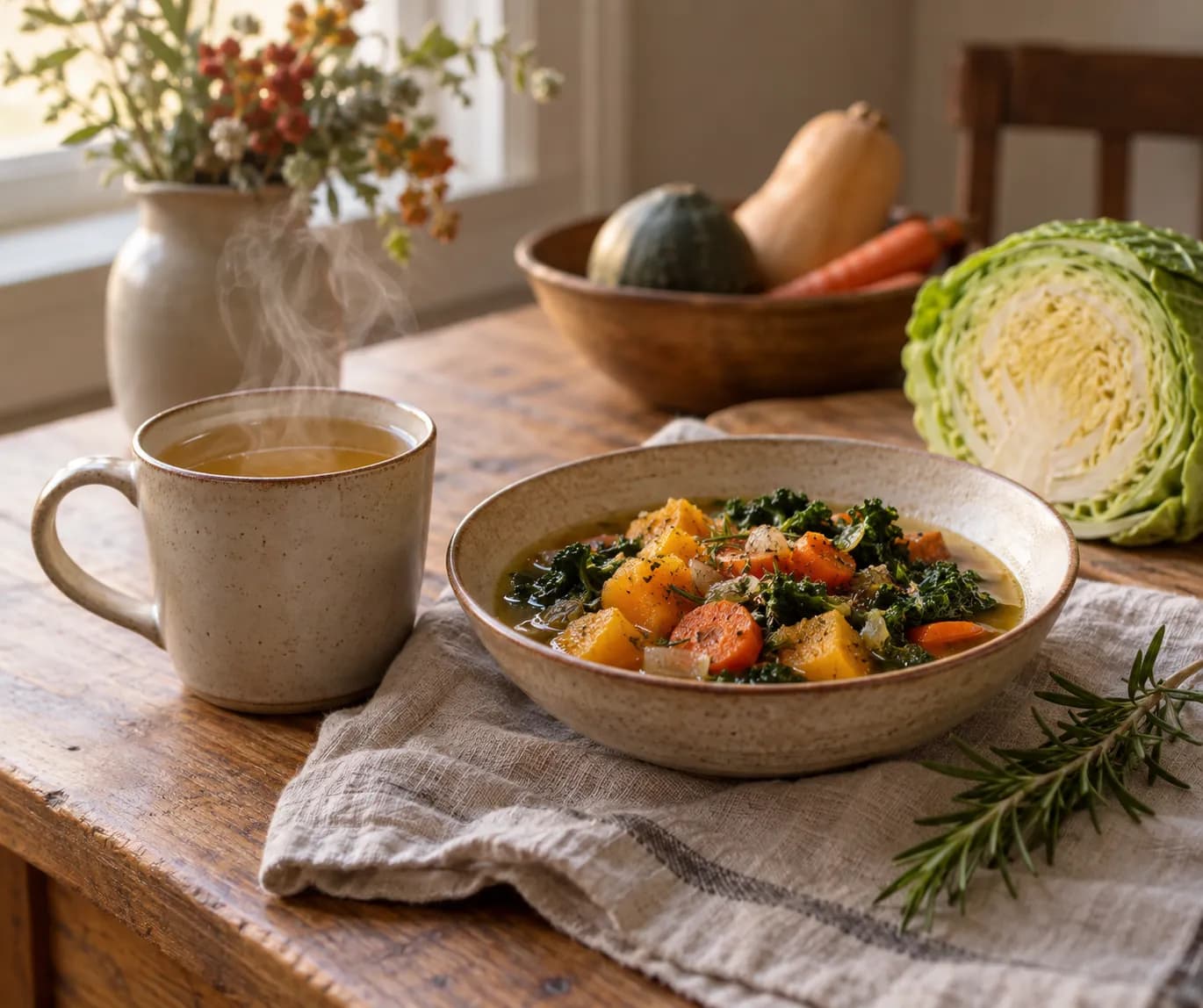
- Bone broth. It contains glutamine, and it brings collagen and highly absorbable vitamins and minerals with it.
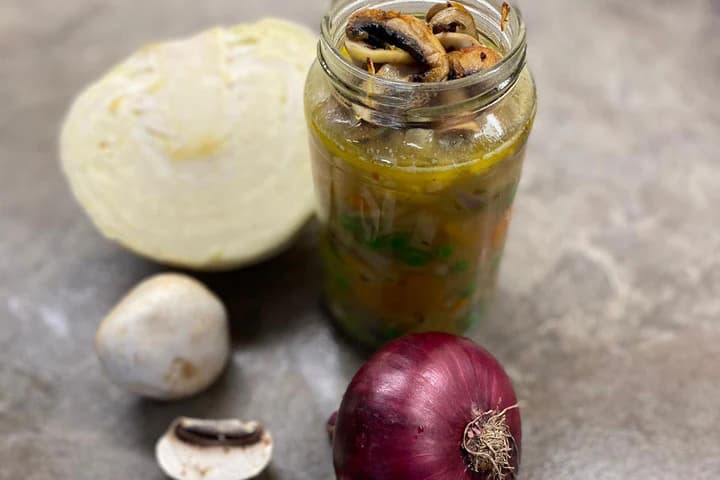
- Cabbage, which is another source of glutamine.
Bone broth is best taken in the morning on an empty stomach, which promotes its healing qualities further. If you have never made a batch, I have written about what is actually in it.
Muscle, creatine and longevity
This came up in the room and it belongs in the notes. Creatine matters for men and women both, and not only for people who train. It helps you build and maintain muscle, and muscle mass is indicative of longevity — the more of it you have, the healthier and longer-living you will be.
Unicity do a creatine combined with HMB, a form of leucine, which pushes the creatine into the muscle more effectively. It is called Stronghold. If you want to run all three products, you do not need two Balance sachets a day — one Unimate, one Balance and one creatine works.
Vitamin D — the other half of immunity
Vitamin D is an integral part of the immune system. If your level is not high enough, your immune system is not on surveillance. It is also a significant one for the nervous system and the happy-head hormones, which is why low vitamin D is associated with SAD, seasonal affective disorder.
The NHS do not tend to test it as a standard test, and they consider you absolutely fine at 50. Functionally you are not. I aim a good deal higher than that — my full range table and what I do at each level are in the vitamin D post.
Vitamin D also works inside a marriage with magnesium, calcium and vitamin K. If it is not present in high enough amounts, your bone density will not be what it should be.
What we need to work out for each person is whether you are someone who absorbs vitamin D from the sun, or someone who needs supplementation. You might be someone like me, who does not absorb it well from a supplement either — I have an injection every six months. You will never know which you are until you test.
Testing is easier than it used to be. Healf currently do a 37-marker blood test, and booked through my link, with my 10% on top, it comes to £89 against a £199 list price. It is an at-home blood draw using a device similar to a blood sugar monitor, and the results come back within 48 hours. That Healf link is an affiliate link: they pay me a small commission if you book through it, the 10% still comes off your price, and it costs you nothing extra.
It is worth doing if you have no recent bloods to work from, or if something has changed materially since your last set. Once you have the numbers in front of you, work with someone to start improving those markers rather than guessing at a dose — functional testing is where I would begin.
Ready to heal your gut? Book a free 15-minute discovery call and let's build a plan together.
Book Free Call →The autumn stew I made for the talk
Dairy free, gluten free and low FODMAP. This makes three to four servings.
Ingredients
- Half a butternut squash, peeled and cubed
- Three carrots, chopped
- One parsnip, peeled and chopped
- Two celery sticks, chopped
- A cup of button mushrooms, soaked for two hours before use to reduce the FODMAPs
- A cup of wild rice
- Two tins of coconut milk, plus one tin of water
- A tin of chickpeas
- A small bag of tenderstem broccoli
- A small bag of green beans
- A handful of kale, destemmed
- One sprig of rosemary, and around three times as much thyme
- Deodorised coconut oil, salt and pepper
- Cayenne pepper and paprika, for the chickpeas
Method
- Sauté the chopped celery in deodorised coconut oil.
- Add the carrots, parsnip, butternut squash and the fresh herbs, and cook for 10 minutes.
- Add the two tins of coconut milk, one tin of water and the cup of wild rice. Season with a pinch of salt and pepper, and leave on a low heat for a further 20 minutes.
- For the last 10 minutes, add the soaked mushrooms, the broccoli and the green beans.
- Meanwhile, drain the chickpeas, lay them on a baking tray and dry them off with kitchen towel. Spice them how you like — cayenne pepper and paprika both work — and roast until hard and crispy. Let them cool; they go harder and crispier as they do.
- Stir the destemmed kale through before serving, and scatter the chickpeas over the top like croutons.
Who this is not for
If you have an active gut condition that needs investigating first — H. pylori, parasites, significant dysbiosis, inflammatory bowel disease — that work comes before any of this. Fibre into an inflamed or infected gut is not a kindness.
And none of it replaces your GP. If you are on prescribed medication, including a GLP-1 injection, do not change it on your own account because you have read a blog post. Talk to them. I am happy to work alongside them, and often do.
Common questions
Is this the same as just taking a probiotic?
No, and the distinction is worth holding on to. Probiotics are the live strains. Polyphenols and fibre are the prebiotic food those strains live on. Putting strains in without feeding them is half a job.
Do I have to do all of this at once?
Please do not. Pick the one thing you will actually keep, and for most people that is the three months on the gut, because it is what everything else sits on top of.
How long before I notice anything?
Give it a fair three months. The quieter food noise tends to be the first thing people mention; the bowel side improves over time rather than overnight. I would be wary of anyone putting a firm number on it.
Where to start this week
- Tomorrow morning: bone broth on an empty stomach.
- This week's shop: cabbage, and something green and raw with each meal.
- This month: get your vitamin D tested rather than guessing at a dose.
- This quarter: three months on the gut, properly, and a change of probiotic strain at the end of it.
If you are reading this because something is not right — bowels that have never settled, energy gone by three in the afternoon, hormones that will not behave — that is a longer conversation than a blog post can have.
Fifteen minutes, no charge. Tell me what is going on and we will work out together whether this is something I can help with. Bring any recent blood results with you.
This article shares naturopathic and lifestyle guidance for general education and isn't a substitute for personalised medical advice. Always speak to your GP before changing any prescribed medication or if you have an existing health condition.