
This one comes straight from one of Niki's live workshops — the kind of honest, no-nonsense session where everything finally clicks into place. Because here is the truth she keeps coming back to: your body isn't a collection of separate problems. Your sleep, your energy, your cravings, your hormones and your gut are all part of one connected system. And what you do first thing in the morning quietly decides how you'll feel tonight.
If you've ever felt “wired but tired” — exhausted all day, yet unable to switch off at night — this is for you. Let's walk through a full day the naturopathic way.
Start With Light — Your Morning Decides Your Night
First thing in the morning, you actually want your cortisol high. Everyone treats cortisol as the villain, but in the morning it's the hero — it works hand in hand with dopamine to wake you up and get you going. The trick is to get it up early so that it can naturally taper off through the day.
The simplest way to do that is light. When it's safe to, look towards the morning light and let it reach your eyes. Better still, stand outside on the grass for a few minutes — barefoot if you can. It sounds a little woo, but your body runs on rhythm and on cues from the world around you, and many people find that little ritual genuinely settles their whole day.
The flip side is blue light at night. Screens send blue light straight through the retina, and your brain reads it as daylight — so it holds back the wind-down chemistry that leads to good sleep. Even if you're so shattered your head hits the pillow and you're gone, that's adrenal exhaustion, not quality rest. On a wearable you'd likely see poor deep and REM sleep.
So after about 6–7pm, start asking “what am I doing to myself here?” Cut screen time where you can, switch your phone to grey shade, or wear blue-light-blocking glasses in the evening — they don't need to be expensive, a basic pair around £25 does the job. And time your training for the morning or lunchtime rather than late at night, so you're not spiking cortisol and dopamine at exactly the moment your body should be winding down.
Feed Your Brain — The Dopamine Foods
Dopamine is built from an amino acid called tyrosine, and tyrosine is rich in good-quality dark chocolate and raw cacao. Ordinary milk chocolate contains only a trace — just enough for your brain to notice the tyrosine but never enough to feel satisfied. That's the marketing trick: a hint of cacao, a lot of sugar and fat, and you're hooked and reaching for more. Swap to proper dark chocolate or raw cacao, and have it in the morning rather than at night.
You also need selenium present in the body to make dopamine — and, later in the day, to make the serotonin that helps you sleep. Cacao contains selenium, and so do Brazil nuts and walnuts. Three of either, every day, is a lovely simple habit. Remember: we are what we absorb, not just what we eat, so having the raw ingredients in the tank matters as much as the lifestyle around them.
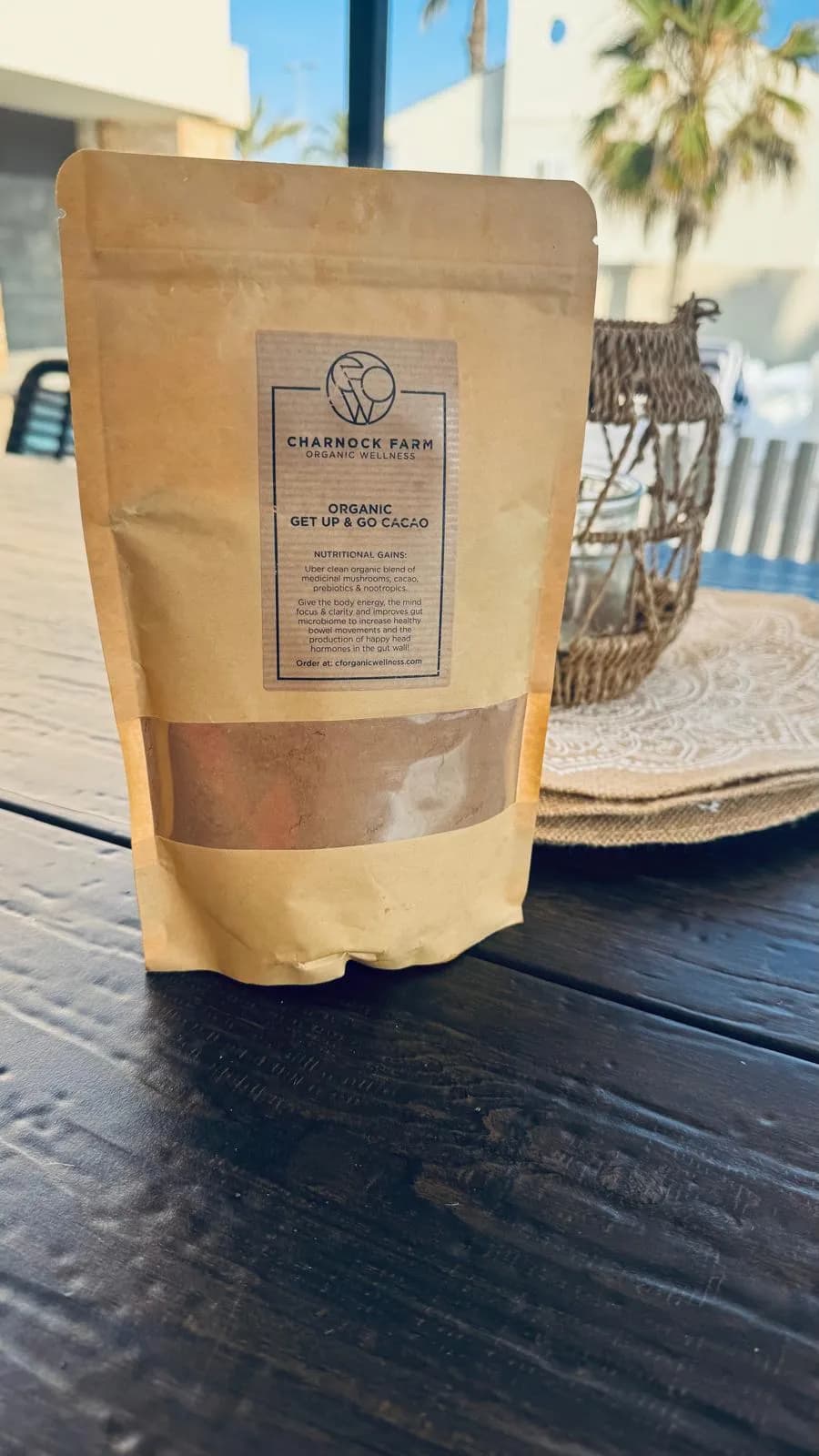
This is exactly why Niki formulated Get Up & Go Cacao — a morning chocolate drink built around the brain and gut. Alongside cacao (for tyrosine and selenium) it brings together nootropic, adaptogenic herbs and mushrooms: cordyceps, the most researched mushroom for increasing oxygen uptake per breath (more oxygen to every cell means less brain fog and better focus); lion's mane, which nourishes brain neurons and the nervous system, supporting clarity and a calmer, less anxious mind; and matcha, rich in L-theanine — the compound that leaves you alert and focused yet calm at the same time. We've also included D-Ribose, a nootropic that lifts cellular energy within about twenty minutes; Black Maca for longer, sustained energy; and digestive enzymes to make sure all these nutrients are properly absorbed. Add prebiotics to feed the gut, and you have a genuine all-in-one. A shot after breakfast or lunch is also brilliant for wiping out the 3pm slump before it starts.
Magnesium — Your End-of-Day Reset
Magnesium is arguably the most important mineral in the body, and it's clever — it works at both ends of the day. In the evening it calms the nervous system so you drop into deeper sleep and stay asleep longer; in the morning, when you're better rested, that same magnesium helps you make energy. It also takes the edge off pain.
The cheapest, most effective way to use it is through your skin — which conveniently bypasses a stressed, sluggish digestion. Reach for magnesium salts rather than Epsom salts (genetically, some of us simply don't absorb Epsom well), pop two big tablespoons into a warm bath, and soak for around twenty minutes before bed.
And a little physio tip, since Niki wears that hat too: sleep on your side with pillows between your knees and your ankles, bad hip on top. Feet stacked together twists the spine; supporting the whole leg keeps it neutral, so your back can actually recover overnight.
Mind the Caffeine-and-Cortisol Train
Caffeine keeps the nervous system switched on — and that includes tea and green tea, not just coffee. If you're waking in the night, it's worth keeping caffeine to one or two cups in the morning only, then moving to herbal teas for the rest of the day and seeing what changes.
Watch the classic wired-but-tired pattern, too: a coffee on waking, toast an hour or so later, then a banana or another coffee when you start to flag. That's you chasing insulin and cortisol up and down all day long. Your body thrives on rhythm — eating and going to bed at roughly the same times each day does more than most people realise.
Insulin Resistance — What's Actually Happening
When you eat, glucose enters your bloodstream and your pancreas releases insulin. Think of insulin as the key that unlocks your cells so that glucose can go inside and be used for energy. That's exactly what we want.
Insulin resistance is when that system gets overwhelmed. Too much glucose, too often, means too much insulin — and eventually the cells stop responding to the constant knocking. Now the sugar can't get in, so you feel tired, lethargic, foggy and “wired but tired.” You reach for food for energy, but it still can't get into the cells, so you actually feel worse.
There's a weight and inflammation twist, too. At high levels insulin is inflammatory and damaging to the vital organs, so the body wraps it in fat to protect them — which is part of why we see stubborn belly (visceral) fat with insulin resistance. But fat cells are inflammatory in their own right, so now you have inflammation on two fronts, and that's often where rising aches and pains come from.
For women there's another layer: fat cells are oestrogenic, so insulin resistance can tip you towards oestrogen dominance — heart palpitations, poor sleep, real brain fog — that can look exactly like perimenopause even when it isn't. Bring your insulin sensitivity back and you narrow that gap, and the symptoms ease with it.
For men, it cuts the other way: excess oestrogen can block testosterone production, and that ripples through the entire system. Testosterone isn't just about bedroom antics — it's the control centre every other hormone and system runs off. When it drops you might notice low energy and mood, poor concentration and brain fog, cholesterol or blood sugar that won't come under control, and weight gain around the chest (the pectorals), which is very common with oestrogen dominance — to name just a few.
And it isn't only about sugar. Cortisol and insulin travel together, so chronic stress keeps insulin high no matter how clean you eat. Certain medications — some beta-blockers, regular anti-inflammatory painkillers, anti-seizure drugs — can nudge you towards insulin resistance as well. (Never stop or change a prescribed medication on your own; that's a conversation for your GP.)
If you're curious, it's genuinely worth knowing your numbers — fasting glucose and HbA1c, and, where your doctor tests it, C-reactive protein as a marker of inflammation. Knowledge is power. Getting tested while you're well means you can change the trajectory of the things you might otherwise be quietly worried about.
How to Become Insulin Sensitive Again
The good news is that this is very reversible with food and a few habits. Here's the order Niki works through with clients.
1. Leave gaps between meals. Grazing keeps insulin permanently raised until your cells stop listening. Aim for around four hours between meals and let your body rest between them.
2. Try a gentle overnight fast. Somewhere around the twelve-hour mark your body starts a natural cellular clear-out called autophagy — tidying away worn-out cells — which is anti-inflammatory and anti-ageing. Simply finishing dinner a little earlier and reaching fourteen hours (most of it while you sleep) gives you a couple of hours of that clean-up. One important caveat: if you're very stressed or going through menopause, long fasts can backfire — keep it gentle and don't push to sixteen hours.
3. Dress your carbs and mind the order. Never eat fruit on its own — pair it with fibre, fat or protein (an apple with nut butter, or fruit at the end of a meal), which blunts the sugar spike. Better still, eat in order: a little fibre first (some salad or raw veg), then protein, then fat, then your carbohydrates — rice, pasta, potatoes, pudding. Starting with raw food also brings plant enzymes that help you digest everything that follows.
4. Move around your meals. If you can, train before you eat and have your meal within about ninety minutes — your emptied muscles soak up the glucose instead of letting it spike. No workout? Then walk after eating. Even quietly doing calf raises under the table sends that glucose to your big muscles and flattens the spike.
- Roughly four hours between meals — stop the grazing.
- Finish dinner earlier and aim for a gentle 14-hour overnight fast (skip if very stressed or menopausal).
- Eat in order: fibre → protein → fat → carbohydrates.
- Never eat fruit alone — team it with fibre, fat or protein.
- Walk after meals, or do calf raises at your desk.
Tired of being tired? Book a free 15-minute discovery call and we'll work out what's draining you.
Book Free Call →It All Comes Back to Your Gut
Fibre does double duty here. It slows the breakdown of your food, so your blood sugar stays steady — and it feeds the good bacteria your whole system depends on. Most of us are eating roughly half the fibre we actually need, so there's a huge amount to gain.
Here's why a daily bowel movement matters more than people think. When stools sit in a warm gut, they give off toxins that pass straight through the gut wall — which is only one cell thick — into the bloodstream, feeding bad bacteria that erode the lining. That's leaky gut: the junctions open, the wall stops being selective, and you both absorb less of the nutrients you need and let through things that should have stayed out. The result is systemic inflammation that can surface almost anywhere — brain fog, aches, skin flare-ups, hormonal chaos, poor sleep.
And here's the part that surprises everyone: around 90% of your hormones are made in the gut wall. Fibre also helps you produce short-chain fatty acids, which are part of building those hormones. So healing the gut wall lifts everything downstream — mood, sleep, blood sugar and hormones alike.
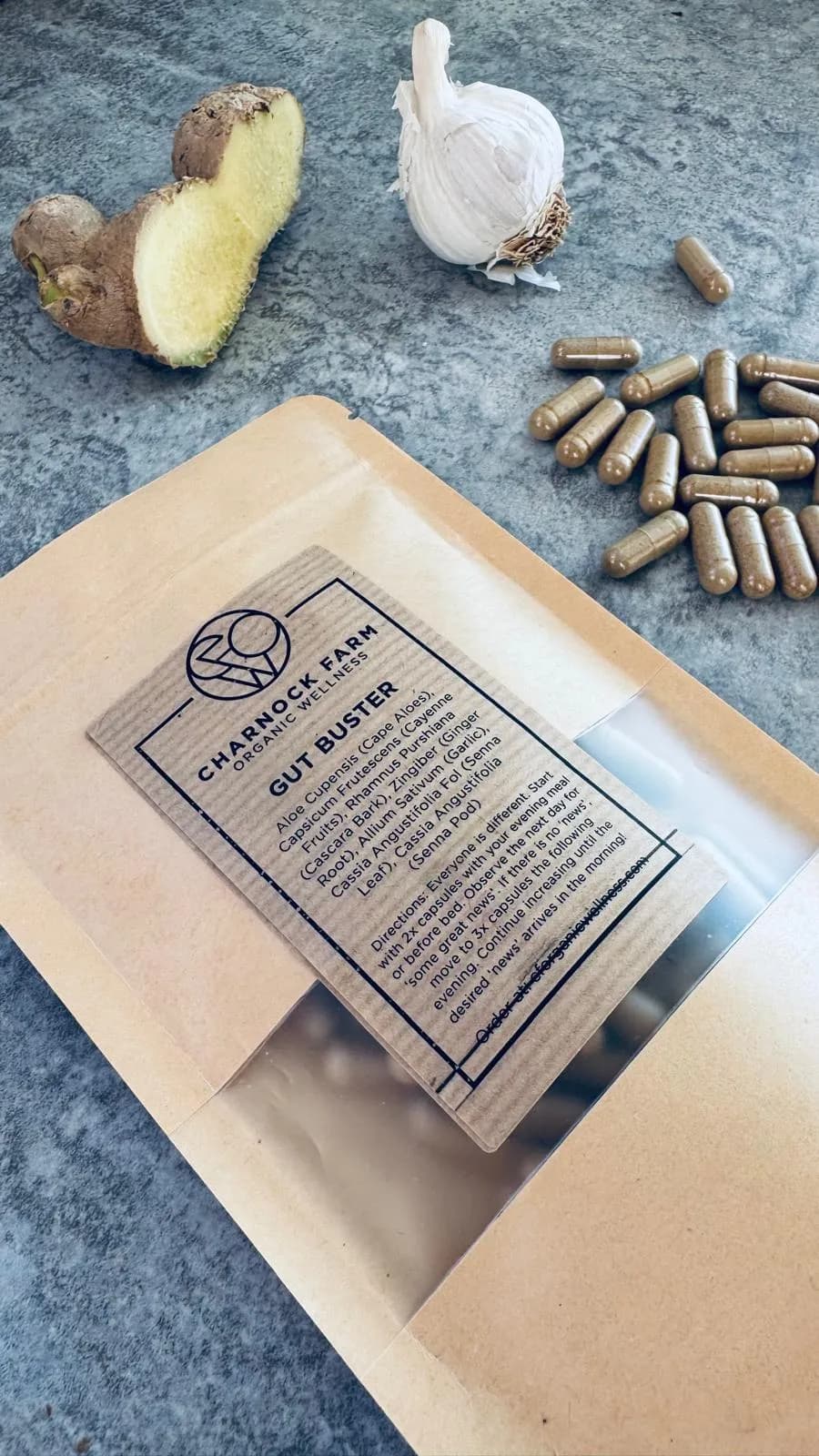
Which is why a daily, well-formed bowel movement is the non-negotiable foundation — the “clear road” that has to come before any other health work. Niki's Gut Buster is her go-to for exactly this: gentle herbal support for a daily movement, with polyphenols in there too. It's nothing like a harsh laxative that leaves you washed out — just a proper, comfortable, well-formed result.
Supporting Your Own GLP-1 — Naturally
GLP-1 is the hormone behind the injections everyone's talking about. It calms cravings and “food noise” and improves insulin sensitivity — all things we want. But here's the key point: GLP-1 is made in your gut. Inject it and it only works while you keep injecting; stop, and nothing underneath has actually been fixed. Support your gut to make more of your own, and the change can last.
It's worth knowing the trade-offs with the injections, too. A good chunk of the weight lost can be muscle and bone, and because they suppress appetite you tend to eat less fibre — which can leave the gallbladder sluggish over time. Whatever route someone takes, Niki's first question is always: what's your exit strategy?
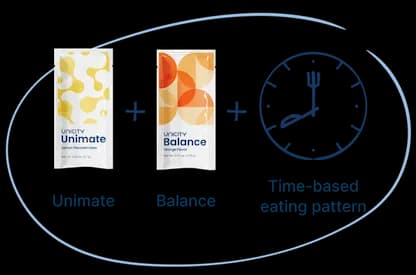
The natural approach she uses with clients is the Feel Great System. In the morning you have Unimate — a polyphenol-rich green-tea drink that helps quiet food noise and sharpen focus (it's lovely to train on, hot or cold) — followed by an orange Balance fibre sachet before lunch and another before dinner. That fibre matrix blunts the after-meal insulin spike and feeds the specific gut bacteria that build your own GLP-1. Give it a fair three months to judge it properly.
For a month, order one box of Unimate and two boxes of Balance. Take the Unimate each morning, then one Balance before lunch and one before dinner.
My side of this, so you can weigh it: orders go directly to Unicity and ship from them — I do not hold or send out stock. I am registered as a distributor, which means Unicity pays me a small commission on orders placed through the affiliate link below, and it costs you nothing extra.
A firm word on medication: if you're on metformin, a GLP-1 injection or anything else prescribed, never stop or change it on your own. Work with your GP — and we're always happy to work alongside them.
Where to Start
You don't need to do all of this at once. Pick two or three things, let them become second nature, then add the next. Small, consistent changes are what actually move your markers.
- Get morning light on your eyes and skin soon after waking, and dim the screens after 7pm.
- Swap milk chocolate for a morning cacao, and add a few walnuts or Brazil nuts.
- Leave around four hours between meals, and eat in order: fibre, protein, fat, then carbs.
- Walk after meals — even ten minutes, or calf raises at your desk.
- Make a daily bowel movement your baseline, and feed your gut plenty of fibre and polyphenols.
- Run a magnesium-salt bath before bed for deeper sleep and less pain.
This joined-up, root-cause way of working is exactly what Niki does one-to-one. If you'd like help making sense of your own energy, sleep, hormones or blood results, we're here for you.
This article shares naturopathic and lifestyle guidance for general education and isn't a substitute for personalised medical advice. Always speak to your GP before changing any prescribed medication or if you have an existing health condition.