

Proactive Health
Proactive health is for people who are not ill yet and intend to stay that way. We take your family history, your functional test results and how you actually live, and turn them into a plan aimed at the risks that are genuinely yours — rather than the generic advice that applies to everybody and therefore to nobody.
The first conversation is always free — 15 minutes, no obligation, and we will tell you honestly if we are not the right people for it.

This is usually the right fit if
- Something runs in your family and you have watched it happen twice
- You have had a scare, or someone close to you has
- Bloods keep coming back “normal” while you feel anything but
- You are doing a lot of the right things and want to know if they are the right things for you
- You are tired of evaluating every study, supplement and protocol yourself
- You want a baseline now, while there is still nothing to fix
What does proactive actually mean here?
It means acting on risk rather than on symptoms. Most healthcare, quite reasonably, waits for something measurable to go wrong. The window before that is where nutrition and lifestyle have the most leverage and the least competition — and it is almost entirely unattended.
The catch is that generic prevention advice is nearly useless. Everyone knows to eat more vegetables. What actually moves the needle is knowing which specific vulnerabilities you carry, what your current markers say, and which handful of changes would matter most for you.
Genetics tell you the loading, not the outcome
A genetic predisposition is not a sentence. It tells us where your system is more likely to struggle under load — how well you clear certain compounds, how you handle methylation, how your body deals with fats or with oxidative stress. What it does not tell us is whether that will ever become a problem, because that depends on the load you put on it.
So we read genetic information as a map of where to look, then go and check with functional testing what is actually happening now. A predisposition with clean markers is a reason to keep an eye on something. A predisposition with markers already drifting is a reason to act this month.
What do you test, and why not just test everything?
Because a test you will not act on is an expensive way to feel busy. We choose tests that will change what we do: comprehensive blood panels, stool analysis for gut and microbiome health, hormone panels, methylation profiles, hair mineral analysis for heavy metals and mineral status, and allergy testing where symptoms warrant it.
We organise the tests through partner laboratories under our practitioner accounts, and we interpret them properly. If you already have results — from your GP, from a previous practitioner, or from a kit you bought yourself — bring them. Interpretation is often worth more than another round of testing.
What we do with the answers
We build a plan with a small number of high-leverage changes, in priority order, with a way to check whether they worked. Food first, because it is the largest and most sustained input. Then targeted supplementation where there is a demonstrated gap, not a speculative one. Then the lifestyle pieces — sleep, movement, muscle, stress load, and reducing what you are being exposed to.
Then we retest. A proactive plan without a follow-up measurement is a guess with better presentation, and guessing is the thing you came here to stop doing.
What working with us looks like
- A full family and personal health history, taken properly rather than ticked off a form
- Review and interpretation of any results you already hold
- Functional testing arranged through partner labs where it will change the plan
- A prioritised plan — the few things that matter most for you, not a list of forty
- Targeted supplementation based on measured gaps
- A retest point so you can see whether it worked
Not sure if this is the right starting point?
That is exactly what the free call is for. Fifteen minutes, no cost and no obligation — we will work out whether proactive health is where you should start, or whether something else fits better.
Common concerns we work with here
- a family history that worries you
- Parkinson’s, MS or dementia in the family
- cardiac risk factors
- rising blood sugar or pre-diabetes
- unexplained low-level symptoms
- heavy metal or toxic load concerns
- wanting a baseline before anything goes wrong
Proactive Health — your questions
Do I need to be ill to book this?
No — the opposite. This work is most valuable when nothing has gone wrong yet, because that is when the changes have the longest time to compound.
Can you use a DNA test I have already done?
Usually, yes. Bring what you have. Consumer genetic reports vary a lot in quality and in how they present risk, so part of the job is separating what is genuinely actionable from what is noise dressed up as insight.
How much does the testing cost?
It depends entirely on which tests are appropriate, and we will not order any until we have agreed they are worth it. The free discovery call is a good place to get a realistic sense of the range before committing to anything.
How is this different from Anti-Ageing & Longevity?
Same method, different aim. Proactive Health is pointed at a specific family history or risk you already know about. Longevity is the broader long-game version for people with no particular threat in view.
Further reading
Blood, Sweat, and Science
As a lot of you know I’m always signed up to one course or another to better understand my clients functional test results
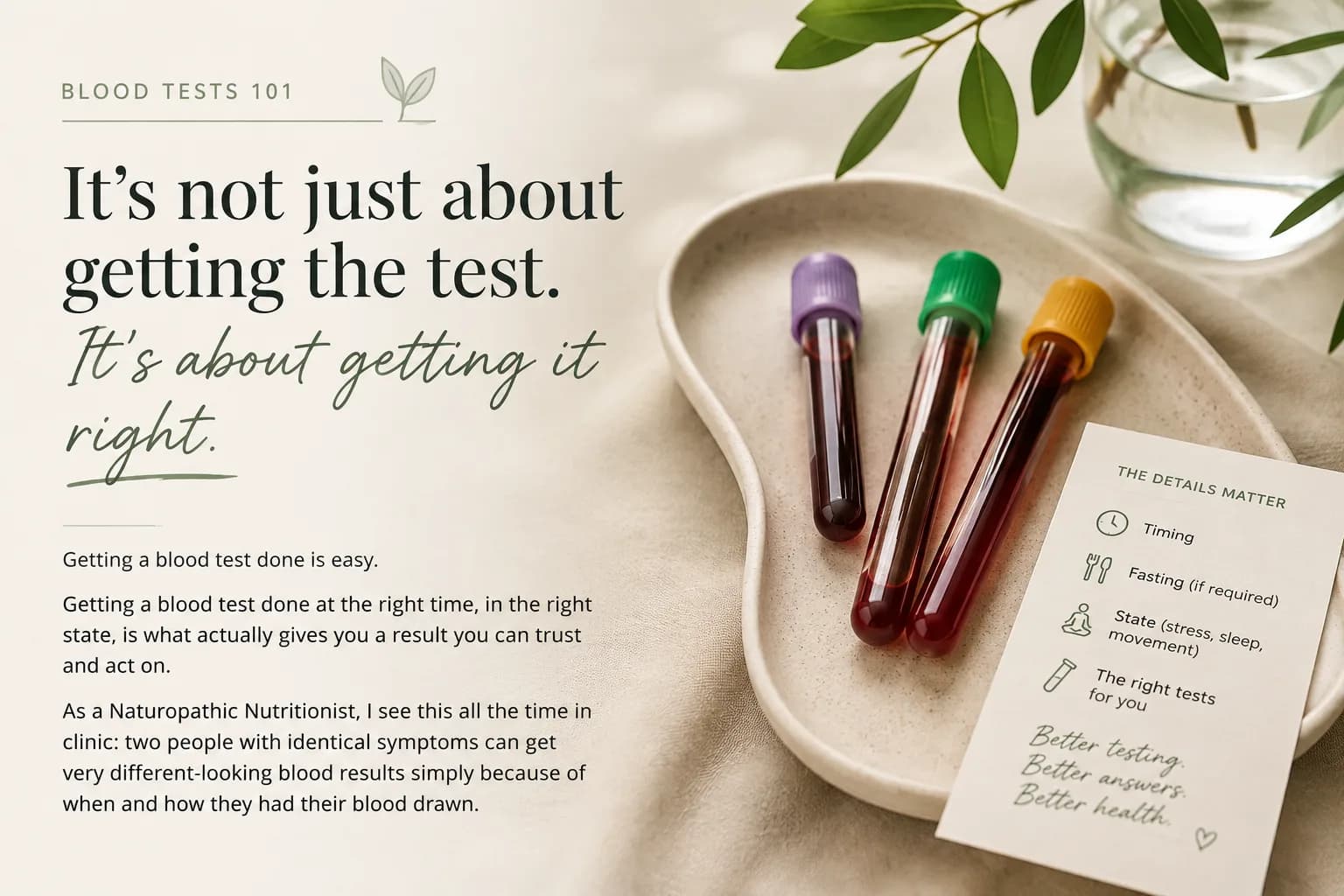
When Is the Best Time to Take a Blood Test?
Morning, fasted, hydrated, four days off alcohol and 48 hours off hard training — and for women, day 21 of your cycle. A practitioner's guide to timing your blood test so the numbers reflect your health, not the day you had it done.

Why Your Vitamin D Level Matters More Than You Think
Over the past few years, working closely with many clients — especially those dealing with immune challenges and cancer — one thing I keep seeing again and again is low vitamin D. It’s one of the most important markers I look at on a blood test. Yet many people don’t realise just how powerful vitamin D is for protecting their health. When you next go for a blood test please ask your doctor to check for this as well.

Unlock Your Body's Hidden Potential: The Ultimate Heavy Metal Detox Experience.
Heavy metal and parasite cleanses seem to be ‘all the rage’ on social media at the moment. From feeding parasites to being the root causes to brain fog, anxiety, depression, increased menopausal symptoms, weight gain and chronic inflammation to name but a few issues being highlighted.
You might also be looking for
- Functional TestingOrder tests through us as your practitioner, so someone reads and explains the results properly
- Anti-Ageing & LongevityNext-level protocols for people who want to stay well, not just avoid being ill
- Diabetes, Blood Sugar Control & Weight ManagementWork out which triggers are actually driving your insulin, your stress hormones and your weight
Or see all our nutrition services.
Last updated: 8 September 2026. Written by Niki Charnock, Naturopathic Nutritionist (CNM/ANP registered) and Injury Specialist. We advise on nutrition and lifestyle — we do not diagnose, and nothing here replaces care from your GP or specialist.