

Pathway 02 — Advanced Lymphatic Therapy
Injury Prevention & Athletic Recovery
Most injuries are not accidents — they are the predictable result of imbalances that accumulate over months and years. Combined lymphatic drainage and myofascial release clears inflammatory by-products after hard training, restores fascial suppleness, and addresses the loading patterns that cause breakdown before it happens.
Why do most injuries build over time rather than happen by accident?
Unless you have been in a collision — a car accident, a rugby tackle, a sudden traumatic event — the vast majority of injuries are not random. They are the predictable result of imbalances that accumulate quietly, over months and years, until the point of failure.
Your body is highly adaptive. It will mould itself to the positions and demands you place on it — and when those demands are uneven, imbalanced, or repetitive, the consequences are structural.
Prolonged sitting tightens the hip flexors and quadriceps whilst the glutes — arguably the most important force-generating muscle group in the body — progressively disengage. Tight hip flexors and inactive glutes are one of the most well-evidenced contributors to lower back pain and hip pathology, and yet they are so common that most people accept them as an inevitable part of modern life.
Regular fascial and lymphatic work is not simply recovery. It is maintenance of the human machine. Think of it the same way you think about servicing a car: consistent, proactive attention prevents the breakdown that costs far more — in time, pain, and lost training — than the maintenance ever would.
How does lymphatic drainage reduce DOMS?
Delayed Onset Muscle Soreness (DOMS) is the result of micro-trauma and the subsequent inflammatory response in muscle tissue. Lymphatic drainage directly supports the clearance of these inflammatory by-products from the tissue, reducing the intensity and duration of soreness.
Schedule your session following the hardest training session of your week — not only will you recover faster, but the session can be adapted to specifically target the muscle groups under the greatest load, giving you a personalised recovery protocol that compounds your training benefit.
Common patterns we address
- Desk worker hip pattern — shortened hip flexors, inhibited glutes, anterior pelvic tilt: the foundation of most chronic lower back pain.
- Runner’s fascial loading — ITB tightness, plantar fascia restriction, and calf/Achilles overload from repetitive unilateral loading patterns.
- Cyclist’s anterior chain dominance — compressed hip flexors, thoracic kyphosis, neck tension, creating shoulder and knee vulnerability.
- Swimmer’s shoulder — overloaded rotator cuff and lat dominance creating internal rotation restriction and impingement risk.
- Team sport asymmetry — dominant leg loading patterns, adductor/abductor imbalance, and repetitive rotational forces through the lumbar spine.
- Post-surgical compensation — the entire body adapts its movement patterns around pain, creating secondary imbalances that outlast the original injury.
Book your injury prevention & athletic recovery session
Sessions run in Manchester, near Preston, near Southport and once a month in Alderley Edge — you choose the site when you book. If you would rather talk it through first, the free 15-minute discovery call is the place to start.
Injury Prevention & Athletic Recovery — your questions
When is the best time to book a session around my training?
Directly after the hardest training session of your week. That is when the inflammatory load in the tissue is highest and when clearing it makes the most difference to how quickly you are ready to train again. The session can also be adapted to target the muscle groups that took the greatest load.
Can lymphatic drainage really prevent injury, or just help me recover?
Both, but by different mechanisms. Recovery is the clearance of inflammatory by-products after load. Prevention is the fascial side of the work — restoring suppleness to tissue that has become restricted through repetitive loading, and addressing the imbalances that build quietly until something fails.
How often should an athlete have sessions?
Weekly through a heavy training block is typical, dropping to fortnightly for maintenance. The blocks of 5 and 10 sessions are priced for that cadence at £40 and £35 per session respectively.
Is this suitable if I train recreationally rather than competitively?
Yes — and the desk worker hip pattern above is the single most common thing we see. You do not need to be an athlete to accumulate the loading imbalances that cause injury; a sedentary job produces them just as reliably as a training programme does.
Does the session hurt?
No. The compression element is gentle and rhythmic — most clients describe it as deeply relaxing, similar to a full-body massage — and pressure levels are adjustable to your comfort. Myofascial release work can be more direct, and we work within your tolerance.
Further reading
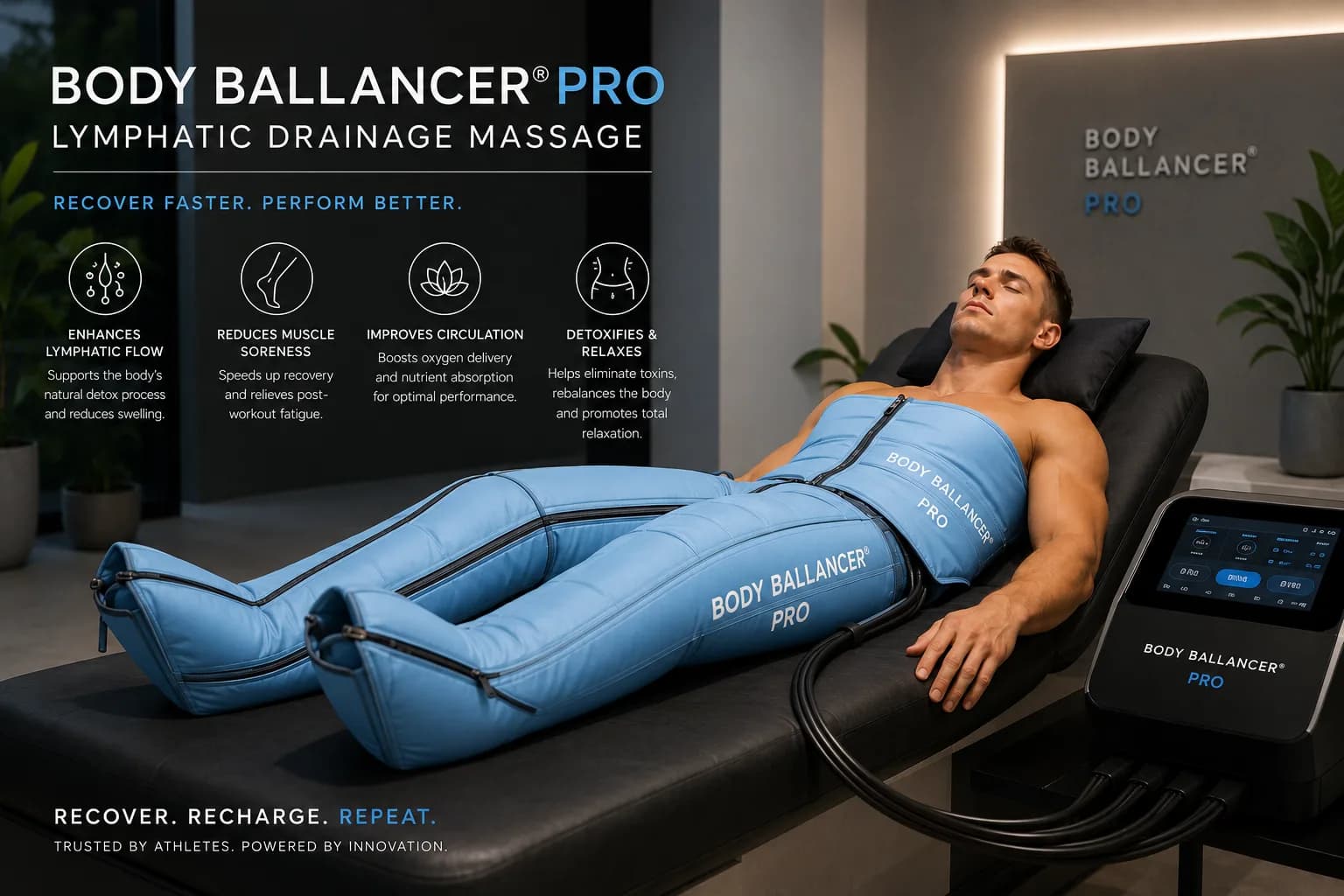
Body Ballancer Pro for Athletes & Gym Members: The Recovery Tool Your Clients Need
Gym owners and PTs in Southport — discover how partnering with CF Organic Wellness gives your clients access to medical-grade Body Ballancer Pro lymphatic drainage therapy: faster recovery, fewer injuries, and better results, without any extra investment from you.

Wired but Tired? A Naturopath's Full-Day Energy & Blood Sugar Reset
Straight from one of Niki's live workshops: a full day the naturopathic way. How morning light, meal order, magnesium and gut health work together to lift your energy, steady your blood sugar and calm cravings — plus the products she reaches for.
Other pathways
- Post-Operative RecoveryReduce post-surgical swelling, accelerate healing, prevent cellulitis and fibrosis, and restore functional movement after joint replacements, abdominal procedures, and cosmetic surgery.
- Brain & Glymphatic HealthSupport the brain’s own overnight waste clearance system by keeping the cervical and meningeal drainage pathways it empties into open and flowing.
Or see all five Body Ballancer pathways.
The Pro Balancer Lymphatic System is a medical-grade therapeutic device. All treatments are delivered under the clinical oversight of Niki Charnock, Naturopathic Nutritionist — trained at the College of Naturopathic Medicine (London), a member of the Association of Naturopathic Practitioners (ANP), with 25+ years of clinical experience in elite sports rehabilitation. Post-operative treatments are offered in conjunction with, and with the approval of, your surgical team. Individual results may vary. This page is for informational purposes and does not constitute medical advice. Always consult your healthcare provider before commencing any new therapeutic protocol following surgery or medical treatment. Read Niki's full background and qualifications.
Last updated: 8 September 2026.